The promise of the Creator Economy is simple: You don't need anybody's permission anymore.
You don't need to own a printing press, radio station, or television network. You don't need a record label, publisher, or other gatekeeper with the resources to distribute your work. You can start a YouTube channel, podcast, or newsletter today and potentially reach millions of people.
That's what makes the Creator Economy so attractive. It's also what makes it so difficult.
When the Barrier to Entry Disappears
Removing the barrier to entry makes it easier to become a creator. It doesn't necessarily make it easier to earn a living as one.
Todd Landfried, co-founder and CEO of N2 Media Holdings, recently wrote about journalists who lose their jobs and are encouraged to become independent creators:
“The creator-economy pitch shifts that problem onto the reporter: Build the audience yourself, absorb the costs, suffer with unpaid labor, and carry the financial risk your former institution used to.”
But the same problem extends far beyond journalism. It's a fundamental challenge facing anybody trying to build a business around content.
When the barrier to entry disappears for you, it disappears for everybody else, too.

The same tools that give you the ability to reach an audience give millions of other creators that opportunity. Every new creator can produce more content, but their arrival doesn't create more hours in your audience's day.
As the amount of content available explodes, all of it is competing for the same finite supply of human attention—and a share of the advertising dollars chasing that attention. The Creator Economy democratized the ability to create and distribute content. It did not democratize the ability to build a sustainable business from that content.
As Landfried puts it:
“Creator income is heavily concentrated, and participation should not be confused with economic security.”
So you ContentMaxx.
When more creators are competing for a finite supply of attention, the natural response is to try harder to win it. You create more content. You improve what you make. You optimize it. You repurpose it. You distribute it in more places. You use AI to help.
You ContentMaxx.
|
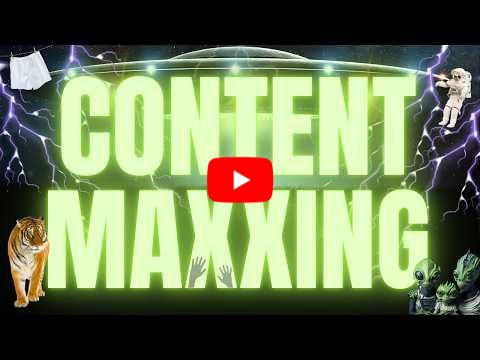
Of course, everybody else can do the same thing. More competition leads to more ContentMaxxing, which leads to even more content competing for the same finite supply of attention.
You can't solve an abundance problem simply by adding more to the abundance.
Build Around a Different Business Model
Content Revenue depends on your ability to create content, capture attention, and monetize that attention. Community Revenue is built around something different: what happens when you bring the right people together.
Instead of only asking, “What can I create for my audience?” you can also ask, “What value could the people in my audience create for one another?”
They might help each other solve problems, exchange ideas, make useful introductions, collaborate, share their experiences, or celebrate their progress together. Instead of being responsible for creating all of the value yourself, you can bring the right people together and give them opportunities to create value for one another.
Removing the barrier to entry made it easier than ever to become a creator. It also made it harder to build a business by competing for attention.
The answer can't always be more content. Sometimes, you need a different business model.
What could a different business model look like for you?
If you've already built an audience, the Community Roadmap Challenge will help you identify how you could create more value with the people you've already reached—and turn that value into revenue.
You'll figure out what could bring the right people together, why they would come back, how you could generate revenue, and whether Community Revenue makes sense for your business.
The next Challenge starts October 5th, and it's the last time I'll run it this year.
Let's Find Out What Your Community Could Look Like
Responses