
What happens when everybody can produce content that competes with yours, for a fraction of the cost?
That's the problem facing content creators as AI makes production cheaper than ever. But the economic pressure started long before ChatGPT arrived.
Economist Joseph Politano recently examined why America's creative industries have lost more than 200,000 jobs over the past four years. While AI may be contributing to those losses, his analysis reveals a larger economic problem: As content becomes more abundant, it becomes harder to make money producing it.
Two Industries, Two Different Outcomes
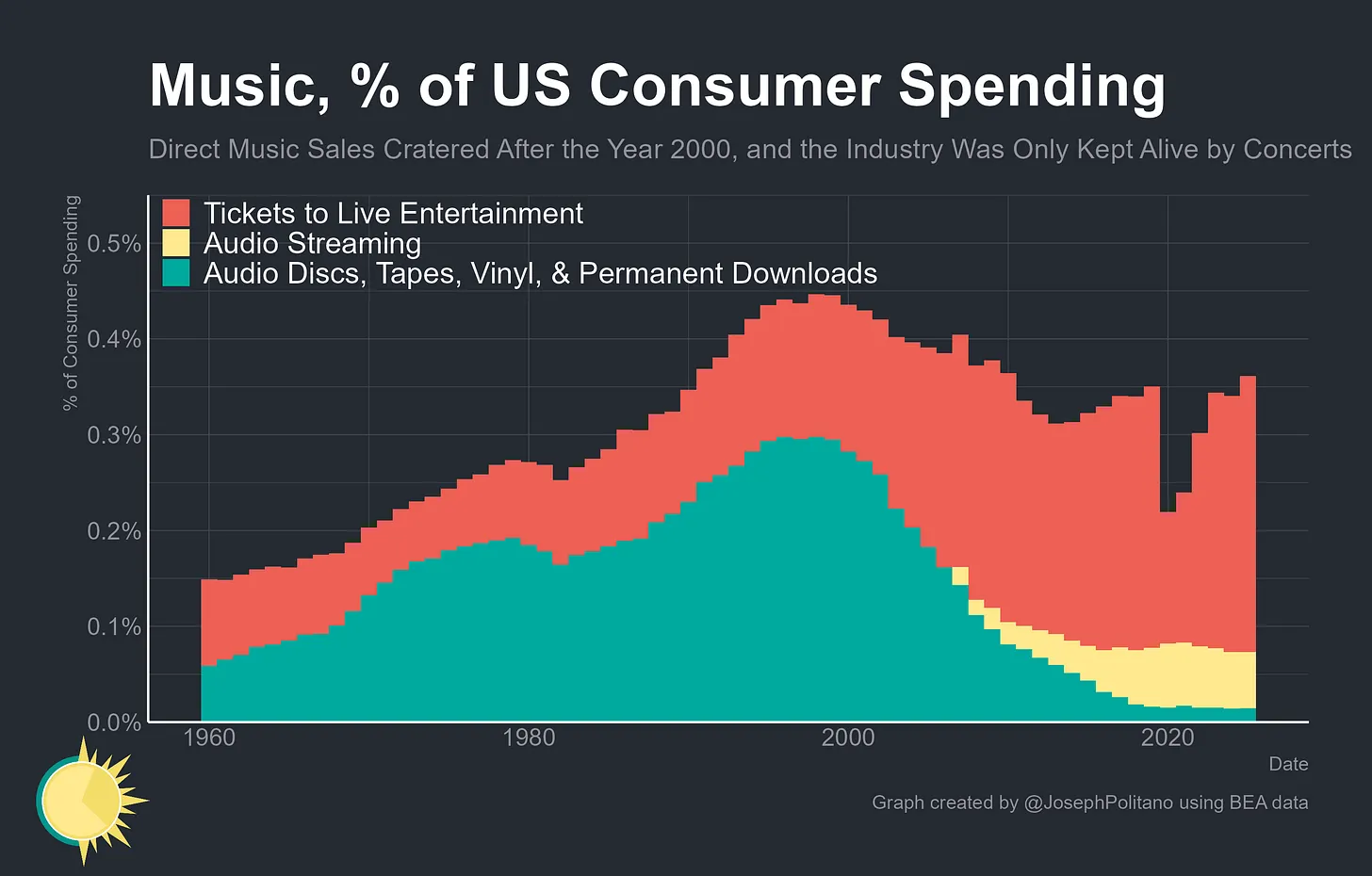
When digital technology made recorded music easy to copy and distribute, musicians increasingly turned to concerts and merchandise to generate revenue.
As Politano explains, recorded music increasingly became a "loss-leading advertisement" for live performances and merchandise. Musicians found ways to make money from something that couldn't be copied: the experience of being there.
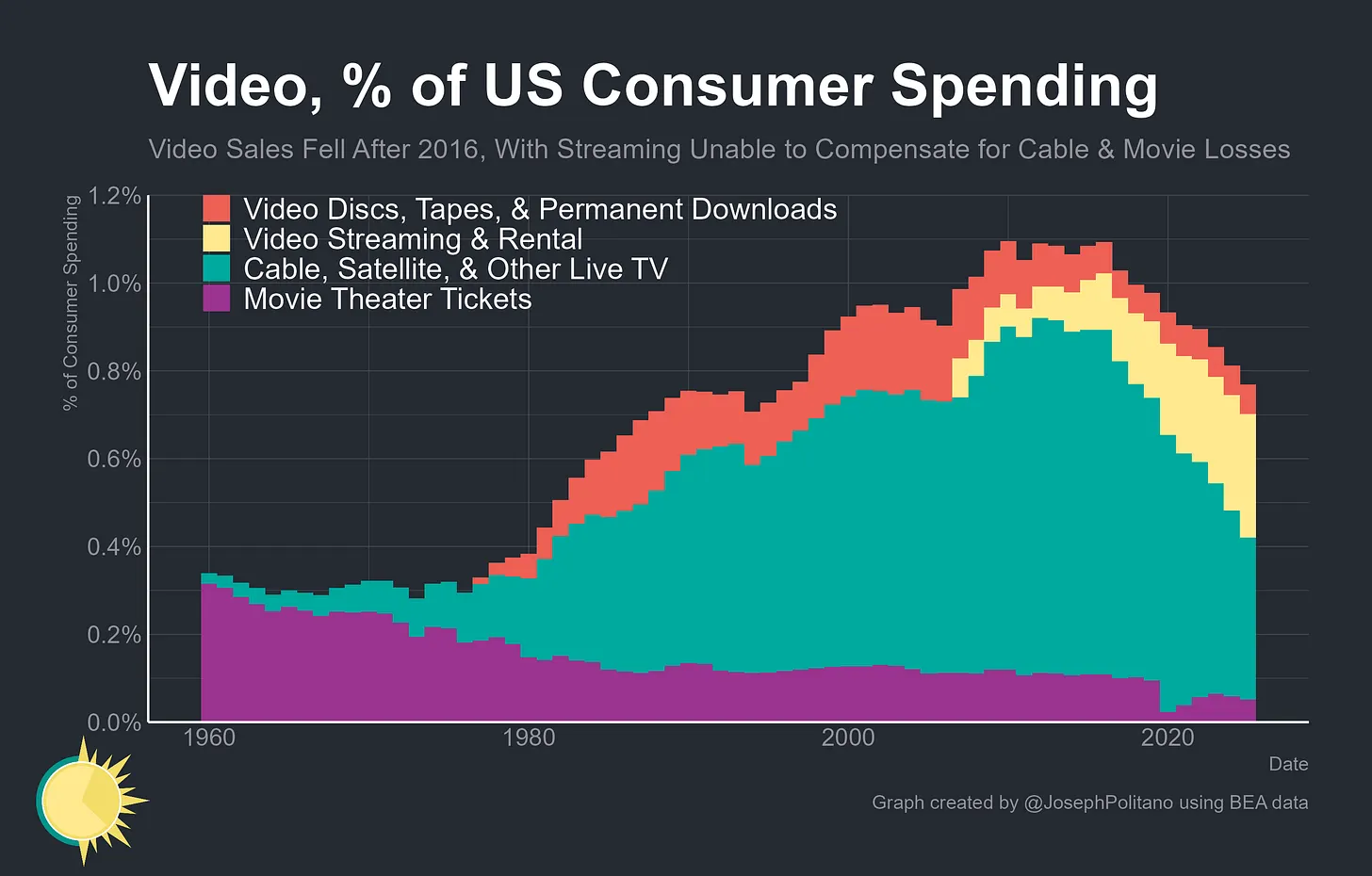
The film industry, however, hasn't found a new revenue source big enough to offset the decline of its traditional business. Politano describes the growing pressure on the video business:
"Today, the plethora of video options and the rise of social media have sent video producers into a vicious competition for limited attention. Even before adjusting for inflation, movie ticket sales ended last year down 25% from their 2019 peak, cable revenue is down 18% from its peak, and streaming revenue has not been able to compensate for the drop. The mountain of free user-generated content on YouTube, Twitch, TikTok, or social media was already presenting harsh competition for traditional video companies in the years before ChatGPT’s launch, and now streaming services are also competing with a flood of AI-generated content. The business model of video media is fundamentally getting squeezed, and unlike in the music industry, there’s basically no equivalent to live concerts that Hollywood can be used to ease the pain."
What Can You Offer That's Still Scarce?
The lesson from the music industry isn't that every creator should start hosting live events. It's that when the thing you're selling becomes abundant, you need to find something else people value that's still scarce.
So here's the question you need to ask: If content is becoming abundant, what can you offer that's still scarce?
One possibility: Meaningful human relationships. People want opportunities to connect with others who share their interests, challenges, and aspirations. They want to learn from one another, help one another, and feel like they belong.
And unlike content, those relationships can't be mass-produced by AI.
That's the opportunity provided by Community Revenue. Instead of relying entirely on creating content for your audience to consume, you bring people together and create opportunities for them to connect, learn from each other, and build relationships that keep them coming back.
By making those interactions possible, you're providing something valuable. You can generate revenue by charging for access to those opportunities or partnering with organizations that want to support them.
Is Your Audience Ready for Community?
Could your audience become a community where people participate, build relationships, and keep coming back?
The free Community Readiness Scorecard will help you assess your audience's potential for community building and identify where to focus your efforts.
Find Your Community Readiness Score
Responses