Last month, Patreon CEO Jack Conte laid out his vision for the future of the platform, and he starts with a critique of social media that I agree with.
Social platforms were supposed to help creators reach people and build an audience. If someone liked your work, they could follow you and expect to see more of it.
But that's not how many of these platforms work anymore. Instead of primarily showing people content from the accounts they've chosen to follow, platforms increasingly use algorithms to decide what appears in their feeds based on what they think will keep them watching, clicking, and scrolling.
That means building a following doesn't necessarily give you reliable access to that following. You can spend years attracting hundreds, thousands, or even millions of followers, only to have a platform decide whether your next post actually reaches them.
As Conte puts it, “We can’t even reach our followers on the platforms anymore.”
Ad-supported platforms make more money when people spend more time consuming content, so they're incentivized to keep people scrolling. Conte wants Patreon to work differently: Instead of optimizing for “short term addiction,” he wants it to optimize for “long term relationship.”
And Patreon is giving creators more ways to build those relationships directly with their fans.
But the relationship at the center of the business is still the same:
Creator → Fan
The relationship hasn't changed
That's Content Revenue: You create something valuable. Your fans consume it. You monetize that attention.
Patreon is working to make that relationship stronger. Its roadmap includes better discovery, public posts, clips, live video, comments, fan profiles, and other features designed to help creators attract fans, deepen those relationships, and convert more people into paying members.
That's good for creators.
But the creator is still responsible for continually producing the content that fans are paying for. If people join your Patreon because they want your videos, podcasts, newsletters, bonus episodes, livestreams, or other content, you need to keep making those things to give them a reason to keep paying.
You may have escaped the algorithm.
You haven't escaped the Content Treadmill.

There's another relationship you can build around
The alternative isn't to stop creating content; it's to stop being the only person responsible for creating value. That's what changes when you build relationships between the people in your audience:
Member ↔ Member
A sports podcast, for example, could bring fans together to talk about and celebrate their favorite teams. The podcaster creates the space, but the fans also create value for each other.
Now you're no longer solely responsible for creating the value that keeps people coming back.
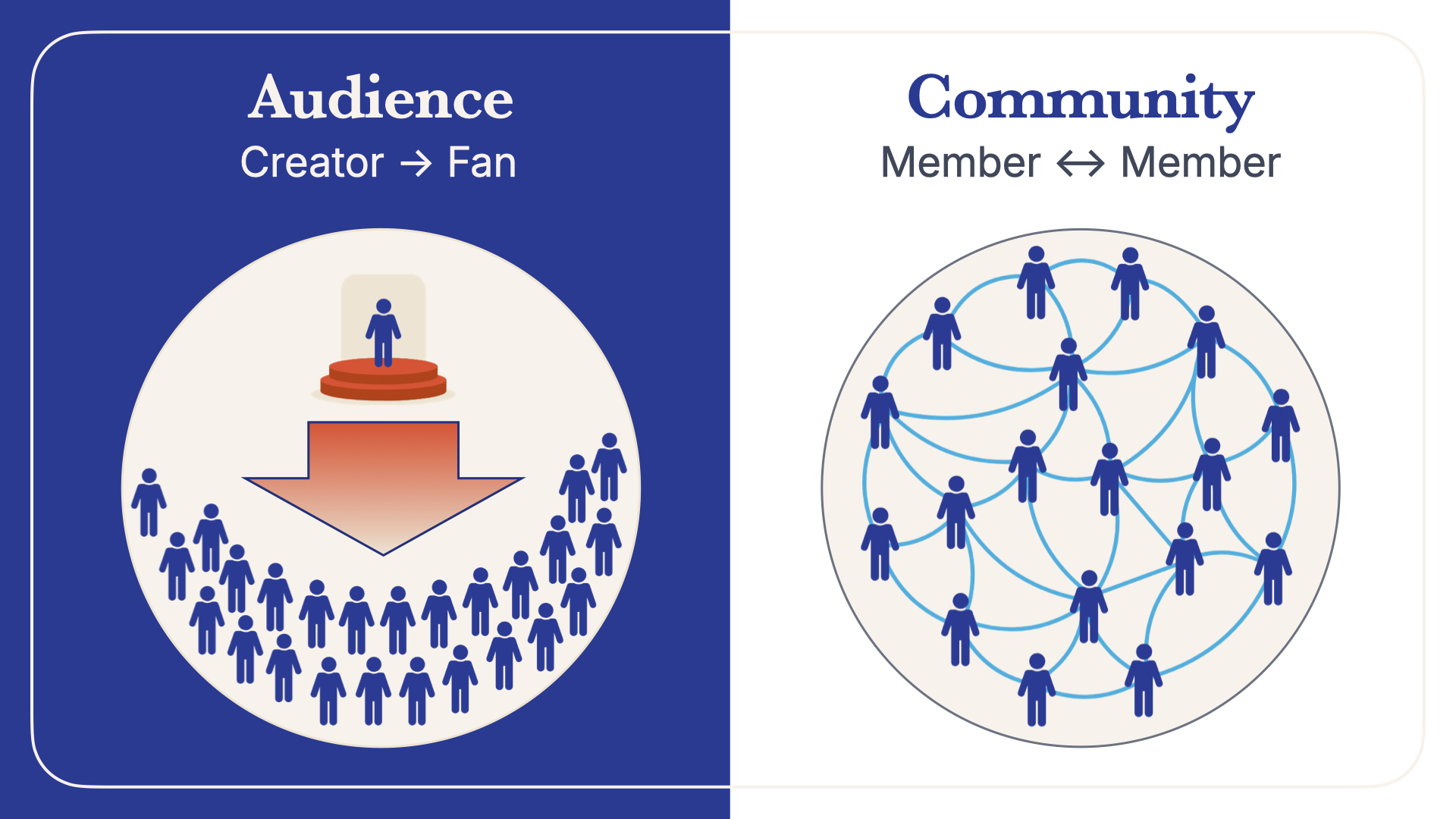
That's the fundamental difference between Content Revenue and Community Revenue.
Patreon is building a better Content Revenue machine.
But if you want to get off the Content Treadmill, you need to change more than the platform you're using.
You need to change who creates the value.
What could that look like for you?
That's what we'll explore in my free Beyond Content Workshop. We'll look at the audience and assets you already have and identify where you could create new value by bringing people together — without requiring you to produce more content or reach more people.
Find Your Community Revenue Opportunity
Responses