
The radio industry is celebrating a new study claiming AM/FM radio has ten times the ad-supported audience of Spotify.
That didn't sit right with me.
The study compares every AM/FM radio station in America to a single streaming service—and only the ad-supported portion of that service.
That's like saying more Americans eat fruit than potatoes. It's true, but fruit is an entire category while potatoes are a single vegetable.
If you want to know whether potatoes are popular, comparing them to every fruit doesn't tell you much. A fairer comparison would be potatoes versus carrots, or fruit versus vegetables.
That's what bothered me about this comparison. It doesn't compare AM/FM radio to streaming music. It compares an entire industry to one company—and because the focus is ad-supported listening, it excludes most of Spotify's audience.
A Different Way to Read the Data
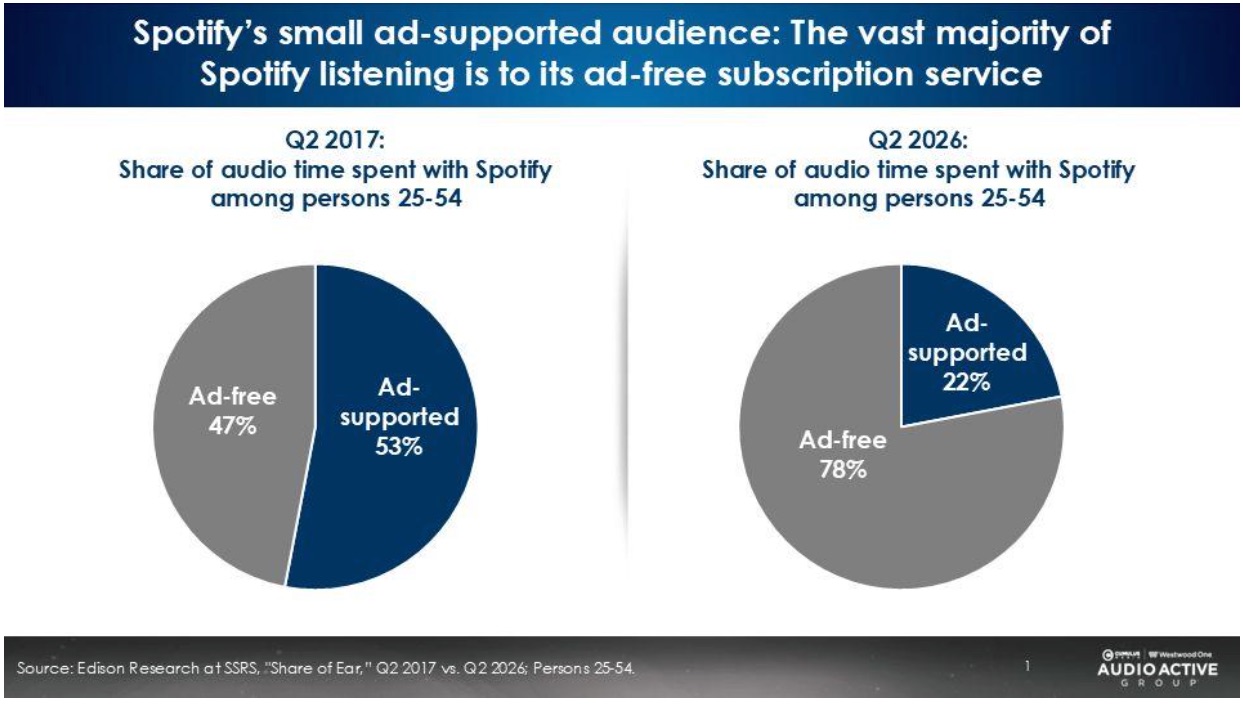
In fact, the same study found that 78% of all Spotify listening happens on Premium, where listeners never hear an ad.
The article treats this as a disadvantage for Spotify because advertisers can't reach those listeners. This makes sense if you're looking at the findings through the lens of advertising.
But I see it differently. I think it's just as important to ask what it reveals about audiences.
Millions of people had a choice: listen for free with ads or pay to remove them. Most chose to pay.
If millions of people are willing to pay to avoid advertising, what are they actually looking for from local media?
What Audiences Actually Want
Another recent study tried to answer exactly that question.
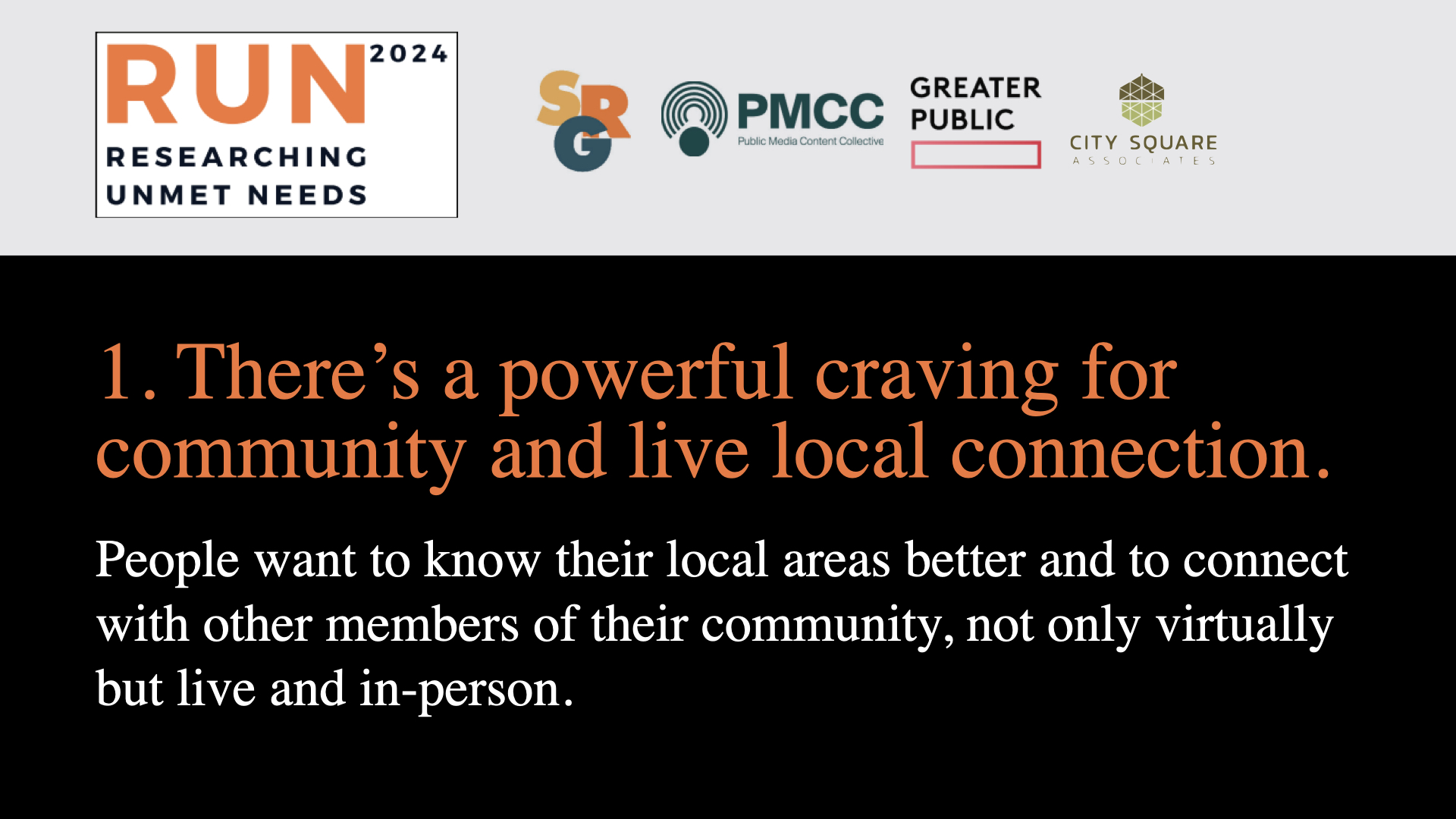
In 2024, the public media industry launched the Researching Unmet Needs (RUN) study to better understand what audiences wanted from local media. Instead of measuring audience size, it asked what people actually valued.
The study's first major finding wasn't about ratings, revenue, or reach. It was this:
"There's a powerful craving for community and live local connection."
Researchers found that people wanted more opportunities to connect with other members of their community—not just online, but in person.
Local Media's Real Advantage
This is local radio's true advantage over Spotify.
Spotify can recommend songs. It can build playlists and personalize your listening experience. But it can't host a town hall, introduce neighbors to one another, or create a sense of belonging in your community.
Local broadcasters can.
So ask yourself: What do people really want from their local media? More commercials? Or more connection?
To me, both of these studies point to the same conclusion:
It's time to stop chasing attention and start building belonging.
Where Do You Start?
If you believe the future isn't just about reaching more people—but building stronger relationships with the people you already serve—the next question is obvious:
What does that actually look like for your organization?
That's exactly what a Community Strategy Sprint is designed to answer.
Together, we'll identify where community fits into your organization, which opportunities are worth pursuing, and the roadmap to bring them to life.
If you're ready to get serious about developing a Community Revenue strategy for 2027, I'm now booking Community Strategy Sprints for this fall.
Responses